Easy to Follow Rolling Your 5e Dd Charc
In Dungeons & Dragons, the character you create to play as is limited only by your imagination. If you want to play a corrupt aristocratic elven swordsman or a whimsical former pirate that casts spells with the power of nature, you can!
However, figuring out how to fill in a D&D character sheet can be a daunting task, especially for those that have never done it before. So today, we're going to help those looking to make their first character sheet with a step-by-step guide of how to fill one out.
Updated July 11, 2022, by Paul DiSalvo: With the recent printing of Mordenkainen Presents: Monsters of the Multiverse, many playable races within D&D received various updates including potent buffs to various abilities. While these racial updates are nice, the book actually alters a step within character creation regardless of what race a player chooses to select for their character. Additionally, Tasha's Cauldron of Everything offers an alternative to traditional race options, providing players with countless options when creating a D&D character.
For the sake of this guide, we'll be creating the renowned Wood Elf Wizard, Sample the Character!
Roll Your Ability Scores
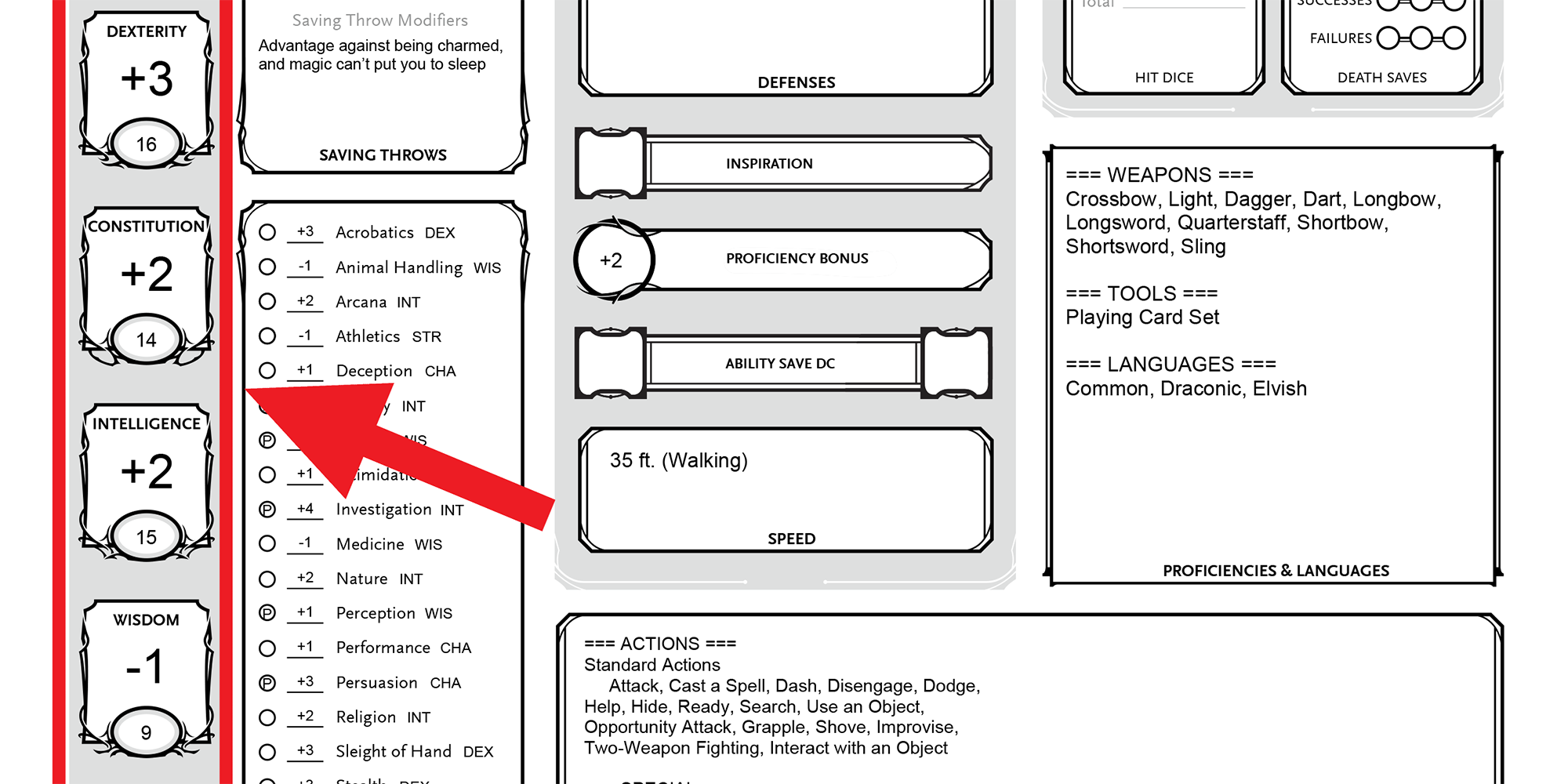
Often the first step to creating a new character is to roll one's ability scores. The six ability scores — strength, dexterity, constitution, intelligence, wisdom, and charisma — are the backbone of any D&D character, as they are each used in a variety of ways both in and out of combat.
There are many ways for one to roll their stats and a player should always ask their DM their preferred method. Some of the most popular methods are:
- Roll three d6's six times and use these six totals for your ability scores
- Point buy is a method that provides players with a set amount of points that they can distribute among their scores as they see fit
- Manual Array is a method in which players allocate six predetermined numbers to their ability scores.
- For some unorthodox players, the d20 method has players roll seven d20s, dropping the lowest number rolled.
Once these scores have been rolled, they can be recorded in the proper area on one's sheet. In the case of our heroic Sample, we used the d6 method, rolling two 8s, a 12, two 14s, and a 15.
Select Your Race
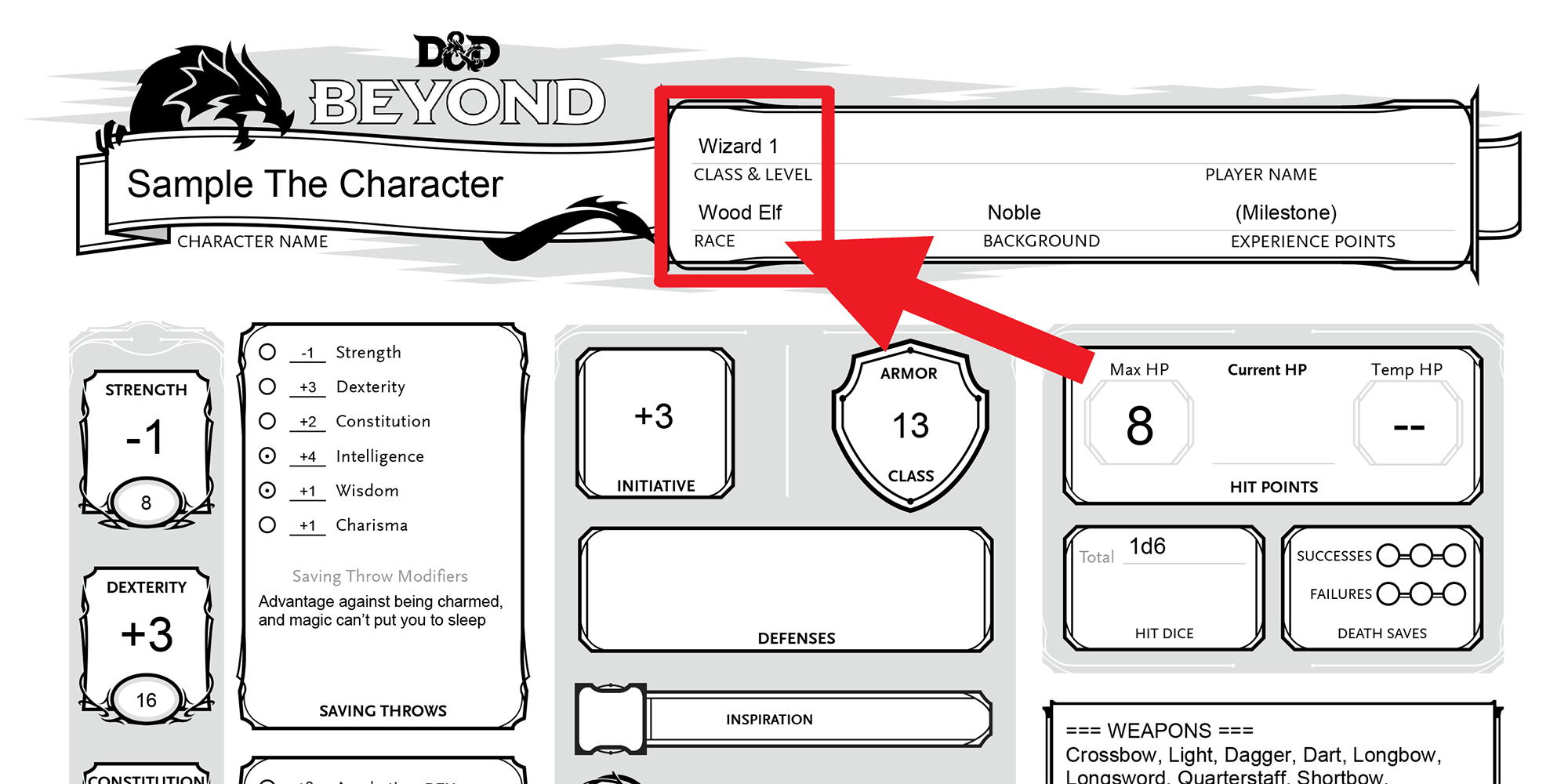
Secondly, you should determine which race you will be playing. There is a wide range of races in D&D, each bringing its own unique flavor and abilities to the table.
When looking at the information detailing each race, you will see that they are stated to augment a character's ability scores to some degree, increasing specific stats while also providing racial abilities. For example, Sample here is a Wood Elf, so he gets +2 to his rolled dexterity, dark vision, proficiency in perception (we'll explain what that means shortly), and a couple of other useful traits in Trance and Mask of the Wild.
However, with the recent changes made in Monsters of the Multiverse, players now have additional flexibility when allocating their stats when they create a character
Flexibility In Monsters Of The Multiverse
While the majority of races in D&D initially were printed with pre-determined ability score improvements, with the printing of Monsters of the Multiverse, Wizards of the Coast wanted players not to feel inclined to need to pick a race that provided optimal ability score improvements for their chosen class. So now rather than a race providing predetermined ability score improvements, a player can choose any one score to increase by +2 and one score to increase by +1, or they can choose to increase three of that character's ability scores by +1.
Additionally, while most races were initially printed stating that the given race gained a predetermined language, a player can now choose any additional language that the player and DM agree fits that character. For example, if a Dwarven character was raised by Gnomes, they may know Gnomish rather than Dwarvish.
As our humble Sample was raised in the Elven village of Tutorialandia, in addition to speaking common, he will be fluent in Elvish.
Custom Lineage
While Sample is a traditional Elf, some players may not be satisfied with race options available in D&D or find that the features for a race they're looking to play may not fit that player's image of their character. Luckily, the Custom Lineage option available in Tasha's Cauldron of Everything has you covered.
In addition to allowing a character to have a visual appearance that fits the player's description, rather than gaining traditional racial features, that character can gain the player's choice of one free feat as well as that player's choice of Darkvision or an additional skill proficiency. This can allow for limitless builds and character possibilities that aren't necessarily detailed within current published D&D books.
Calculate Your Modifiers
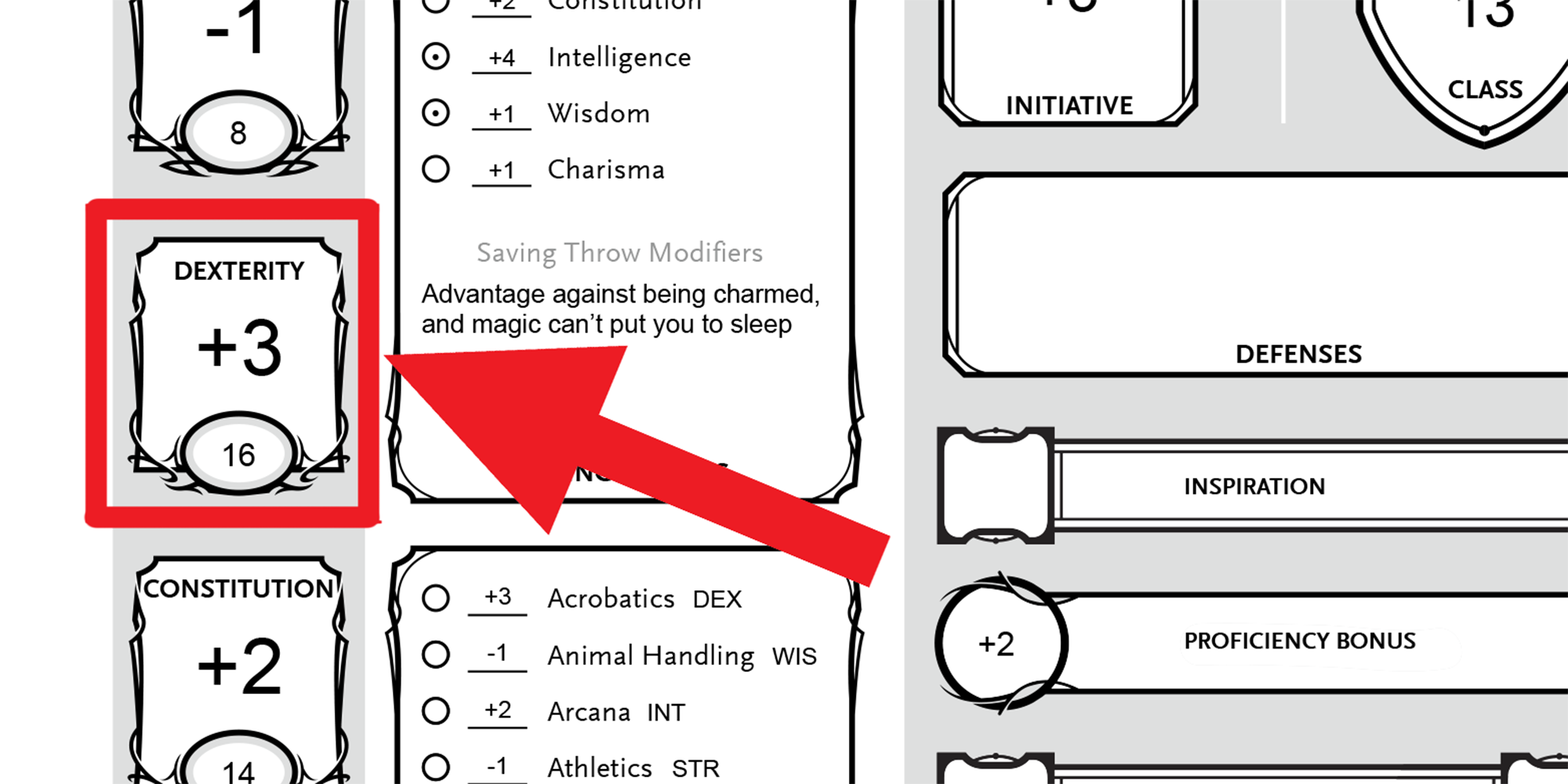
Once you've rolled your ability scores and selected your race, it's time to calculate your modifiers for these scores. This is quite straightforward once you know how. For each ability score, the modifier in that stat is +1 for every two numbers above 10, and -1 for every two numbers below ten.
For example, when making Sample, we'd rolled a 14 and decided to put that roll into his dexterity. Because he's a Wood Elf, his dexterity was increased by 2, making it 16. This would give Sample a dexterity modifier of +3.
Choose Your Class
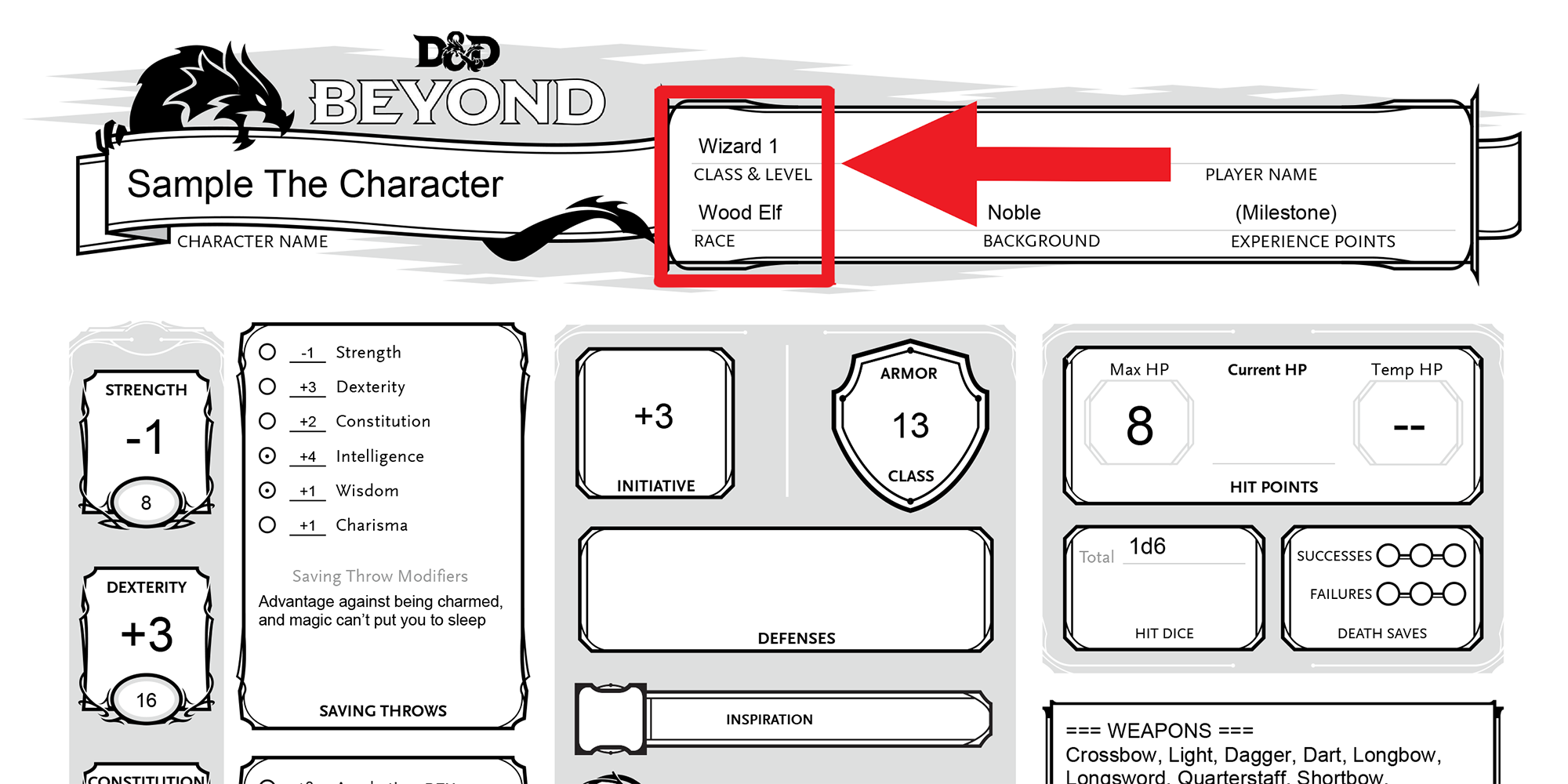
The next step in character creation is to choose a character's class. A character's class determines the majority of their abilities, how they fight, if they can use magic, what kind of spells they can cast, and even how much HP that character gets.
There are currently twelve classes available in the Player's Handbook with a thirteenth class, the Artificer, recently added within Tasha's Cauldron of Everything. Additionally, while not an official class, the Blood Hunter is a popular alternative class option created by Critical Role DM, Matt Mercer, with the class being fully supported and available within D&D Beyond.
In the case of Sample, we decided to make him a Wizard.
Calculate Your Skills
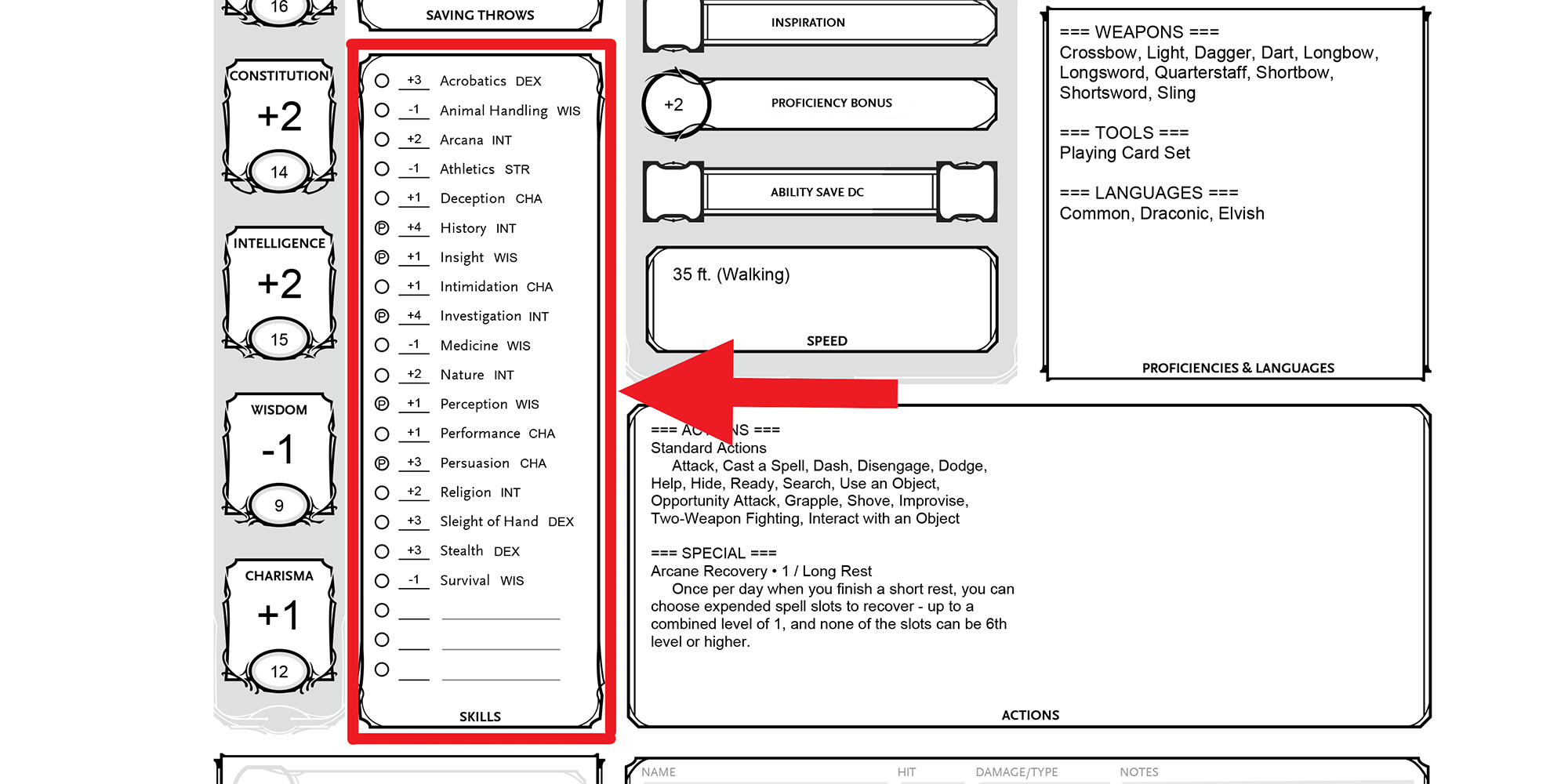
When looking at your character sheet, you may have noticed the long list of skills that span from "arcana" to "survival." Each of these skills correlates to a different ability score that a character uses if they are making a roll that relates to a skill at hand.
Based on a character's class, that character can be proficient in some of these skills, adding their proficiency modifier to that roll as well as their ability modifier.
The proficiency modifier is based on a character's level, and is +2 for a level one character. As Sample is proficient in Investigation and has a +2 intelligence modifier, he adds +4 to all Investigation checks.
Calculate Your Saving Throws And HP
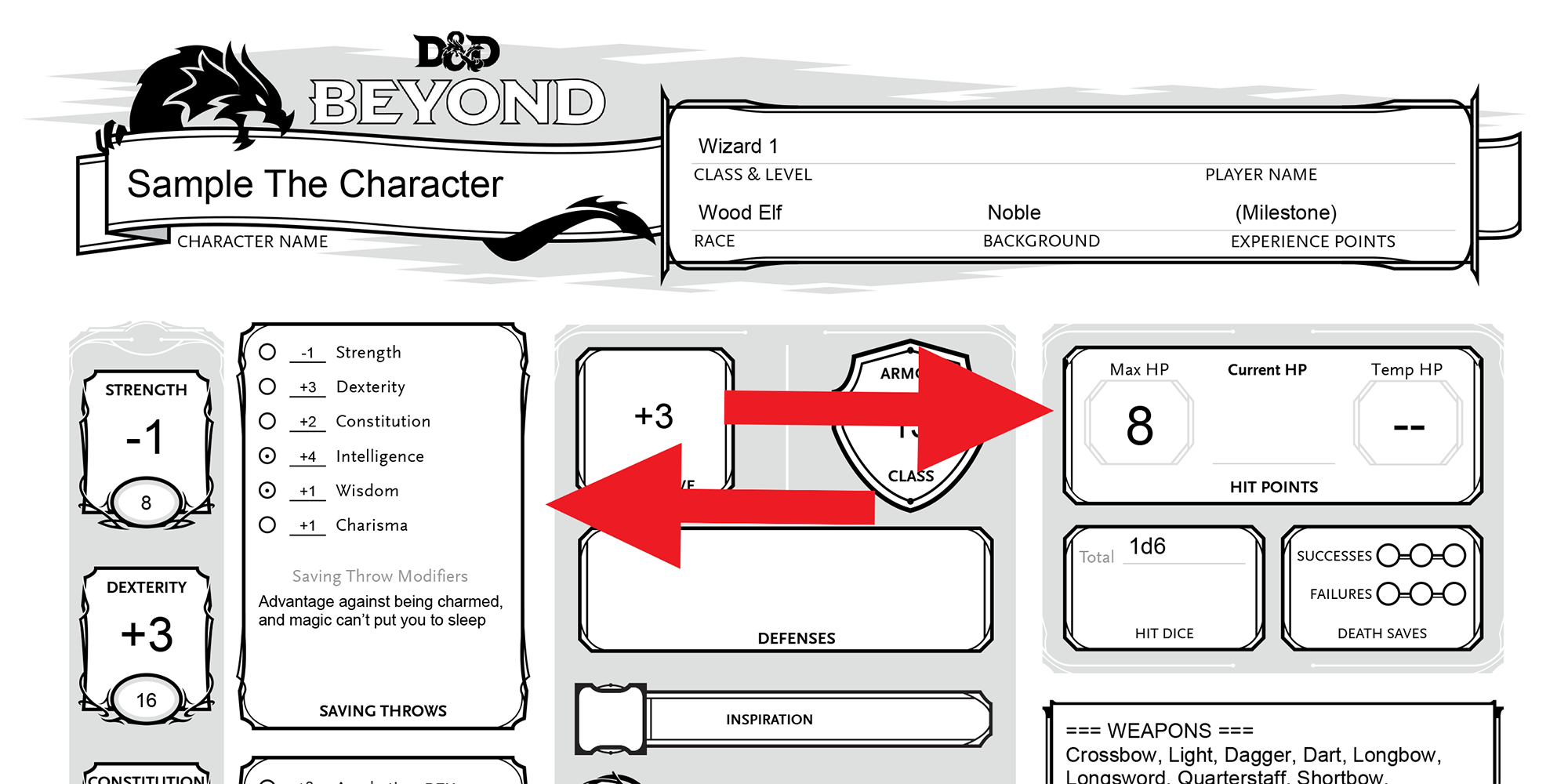
Similar to calculating proficiencies, saving throws and HP take one's ability scores and class into account. Each are incredibly straightforward to calculate as long as you have the proper information.
First, to calculate your saving throws, all you need to do is take your ability modifiers for the six respective ability scores, and add their proficiency bonus to the two specified stats for a given class.
For example, all Wizards such as Sample add their proficiency modifiers to their intelligence and wisdom saving throws. Similarly, to find out a character's starting HP, all you need to do is that the number of their starting hit die (a d6 in the case of wizards like Sample) and add their constitution modifier to it.
As Sample has a +2 constitution modifier, he starts with 8 HP.
Tracking Proficiency Bonus
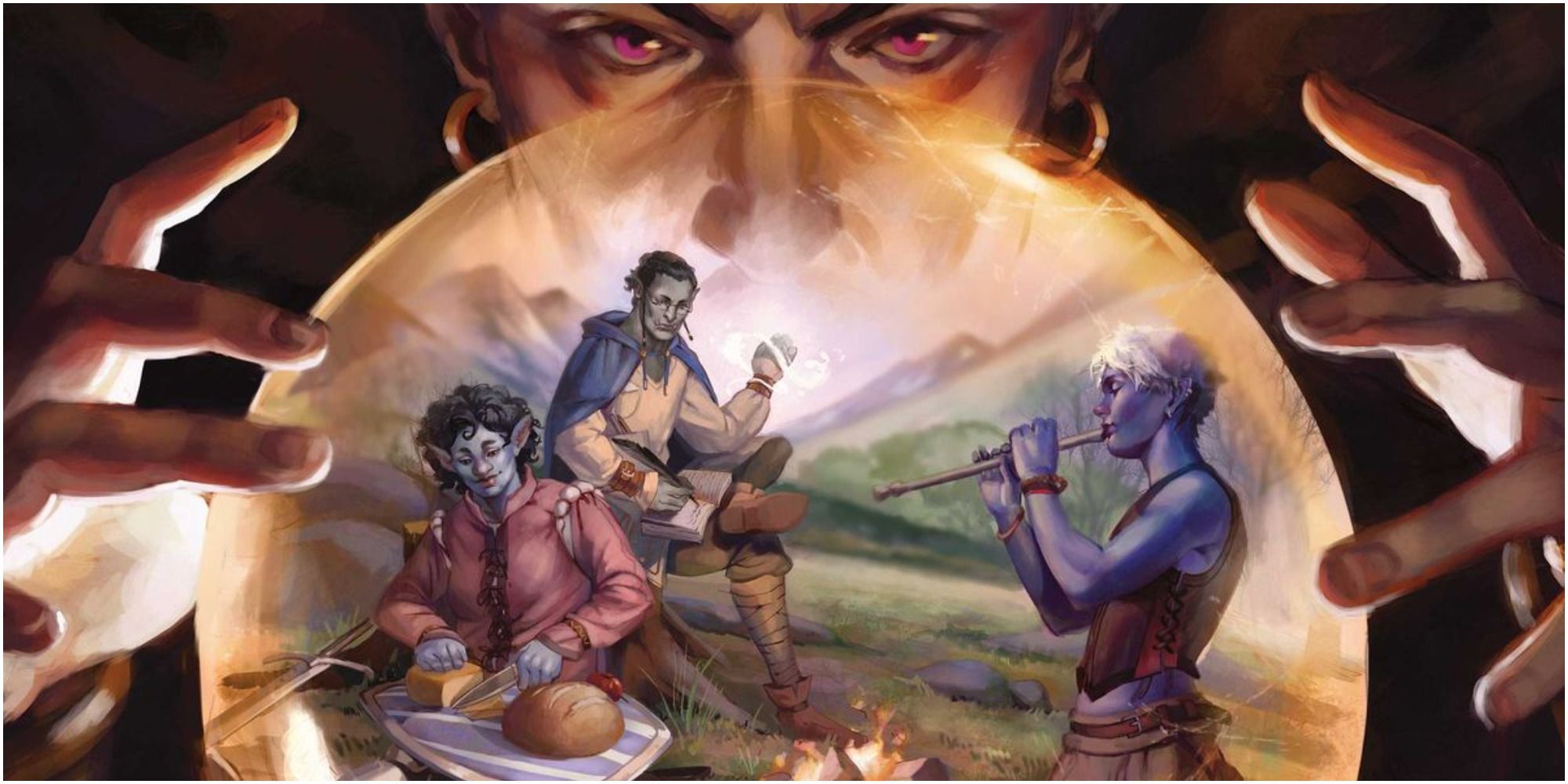
An integral element of any character regardless of their class is their proficiency bonus. As the name would suggest, a proficiency bonus is an additional modifier that is added to rolls made when a character is doing something they're proficient in. This means that even if a character is rather charismatic if they're proficient in Intimidation and not Persuasion, they'd add more to Intimidation checks than they would to Persuasion checks.
Unlike a character's Ability Scores which are chosen, a character's proficiency bonus is automatically determined based on their level. While a level one character's proficiency bonus of +2 may seem meager, as a character gains levels, this bonus grows all the more impactful. Below, you can see how a character's proficiency bonus is determined based on given levels.
| Levels 1-4 | +2 Proficiency Bonus |
| Levels 5-8 | +3 Proficiency Bonus |
| Levels 9-12 | +4 Proficiency Bonus |
| Levels 13-16 | +5 Proficiency Bonus |
| Levels 17-20 | +6 Proficiency Bonus |
As Sample is a level one character, he has a proficiency bonus of +2.
Calculating Your Weapon And Spell Attack Modifiers
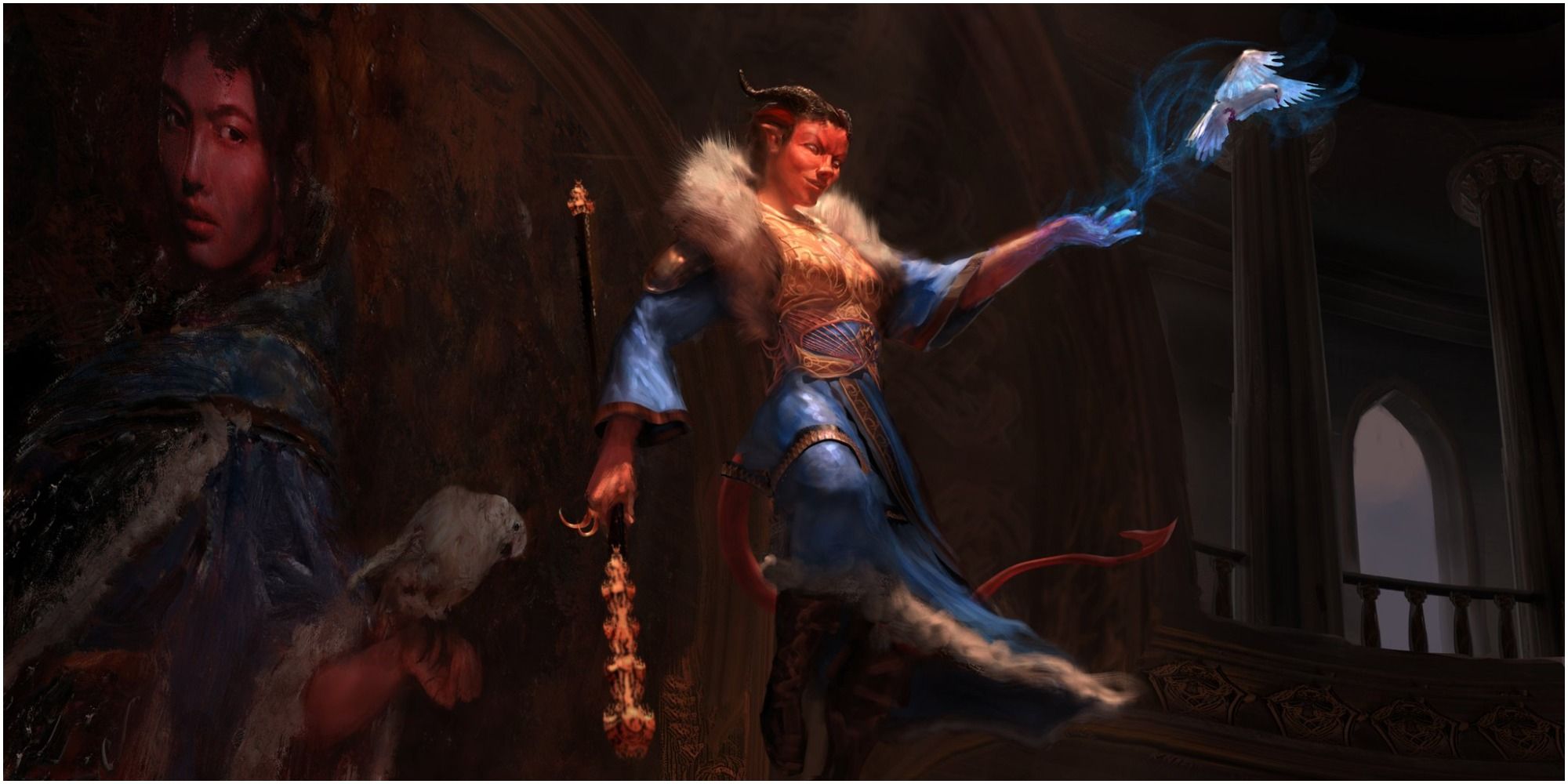
While veteran players are able to calculate this information on the fly, it's quite convenient to calculate your modifiers for your weapon and spell attacks. In order to do this, simply take your relevant ability score modifier; Strength or dexterity for weapon attacks or Wisdom, Intelligence, or Charisma for spellcasters, and add your proficiency bonus. Though some characters may have the same attack modifier for each of their attacks, as some classes like Clerics and Rangers are likely to make both melee and spell attacks over the course of an adventure, it's important to track individual track these modifiers as they will differ.
Though it may seem counterintuitive at first, it's important to remember that the modifier you add to weapon attacks and weapon damage actually differ. This is because while rolls made to hit a target add both the relevant ability score modifier and the character's proficiency bonus, only the ability score modifier is added to the damage. Additionally, unlike weapon attacks, unless specified otherwise such as in the case of a Warlock with the Agonizing Blast Eldritch Invocation, spellcasters don't add their spellcasting modifier to the damage of their spells.
Keep Track Of Your Abilities
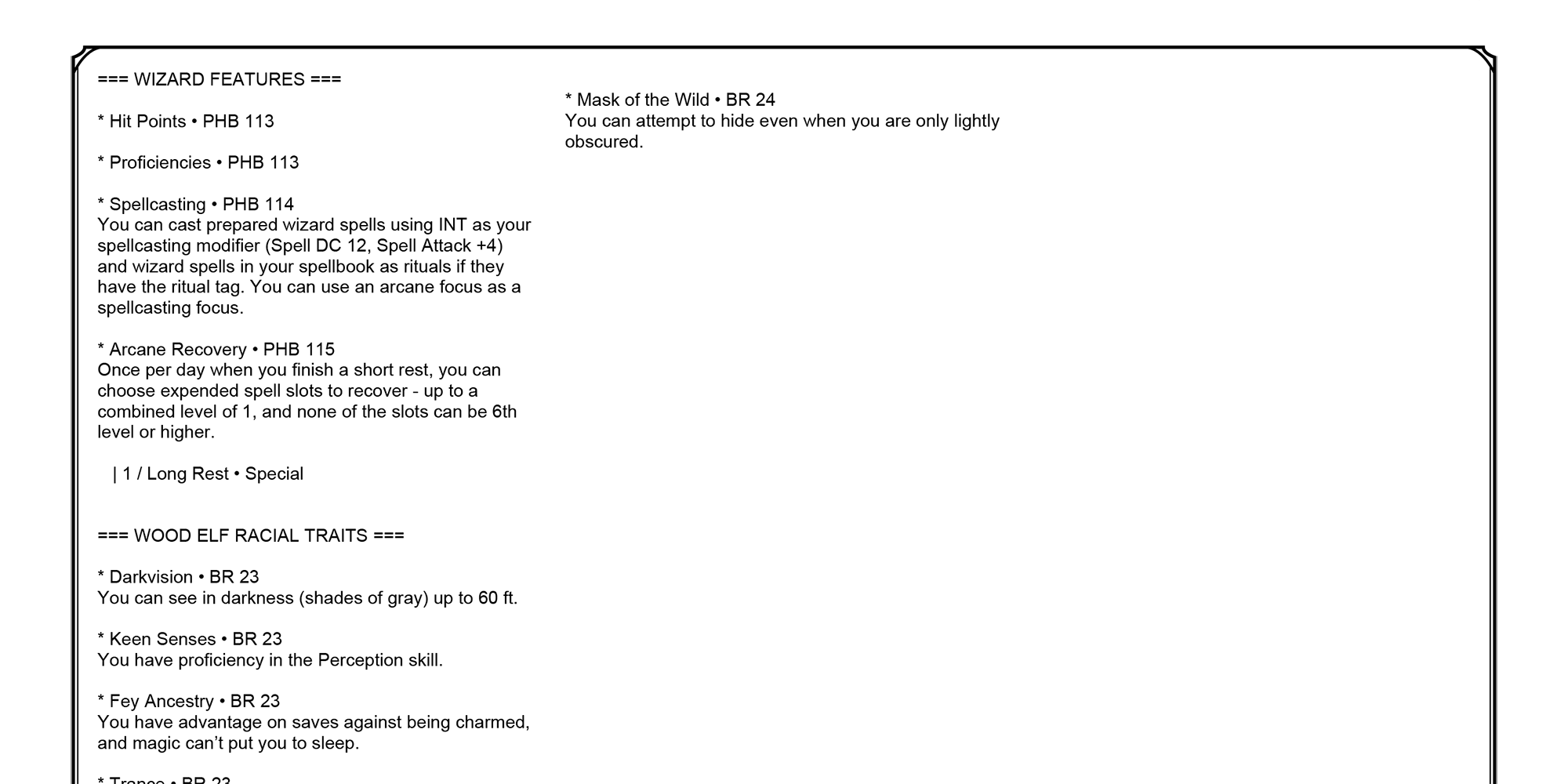
Now that you've selected your race and class, it's a very good idea to keep track of which abilities your character has access to.
While a level one character doesn't have too many abilities to keep track of, as a character levels up, they will gain more and more useful and powerful tricks based on their class. This section of a character sheet can feature both class and race-related features.
Select Your Starting Equipment and Calculate Your Armor Class
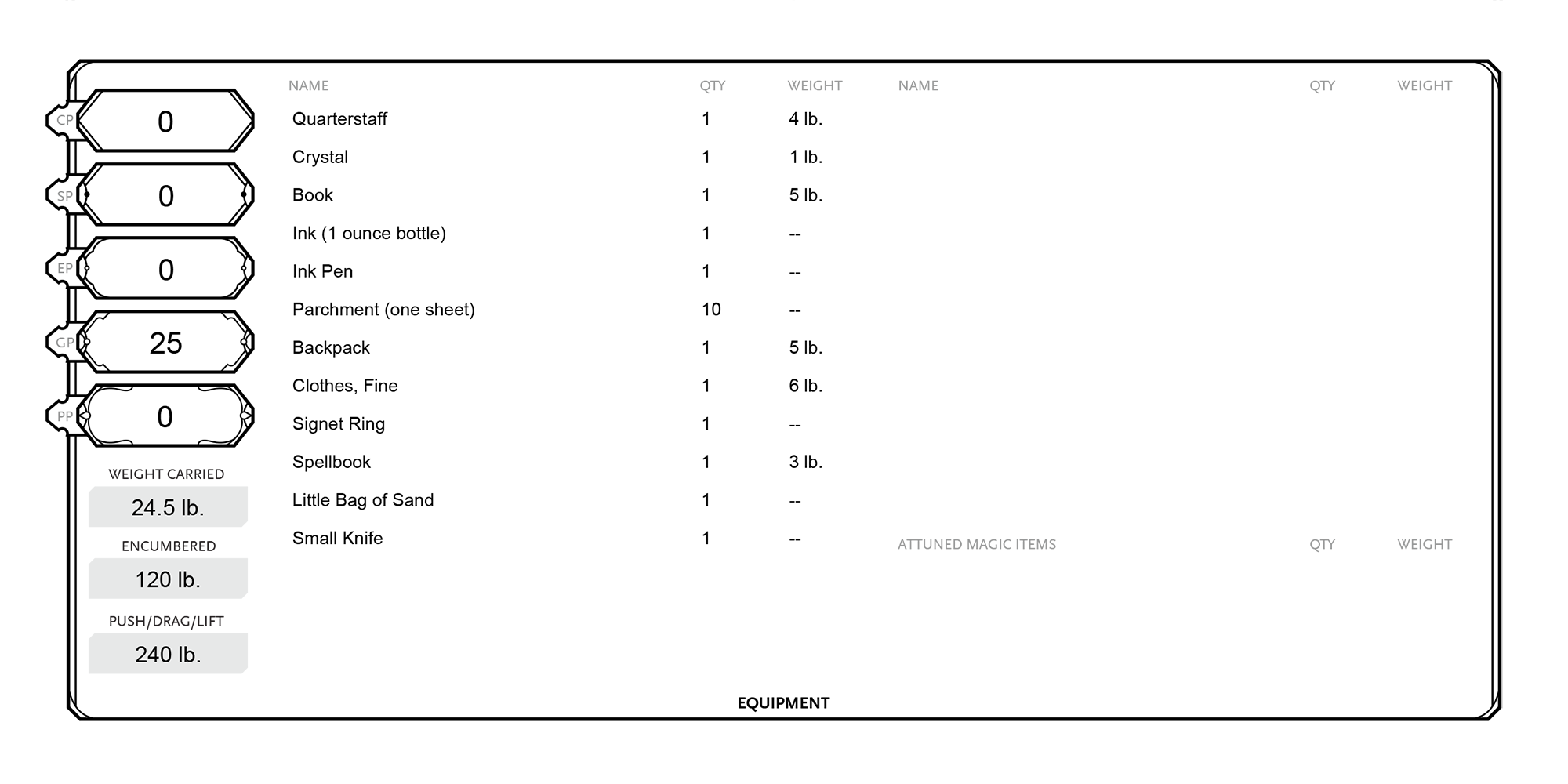
Next, choose your starting equipment and calculate your Armor Class. Each class has dictated starting equipment options to choose from, so this is not a complicated step. Once you have your equipment and armor (if your class gets any), you can determine your Armor Class — the minimum roll that must be met to hit your character.
An unarmored character has a default AC of 10. As long as a character is not wearing heavy armor, they add their dexterity modifier to this number. They then add whatever additional AC is provided by whatever armor they're wearing. As Sample is an unarmored Wizard with a +3 dexterity modifier, his AC is 13.
Select Your Spells (If Applicable)
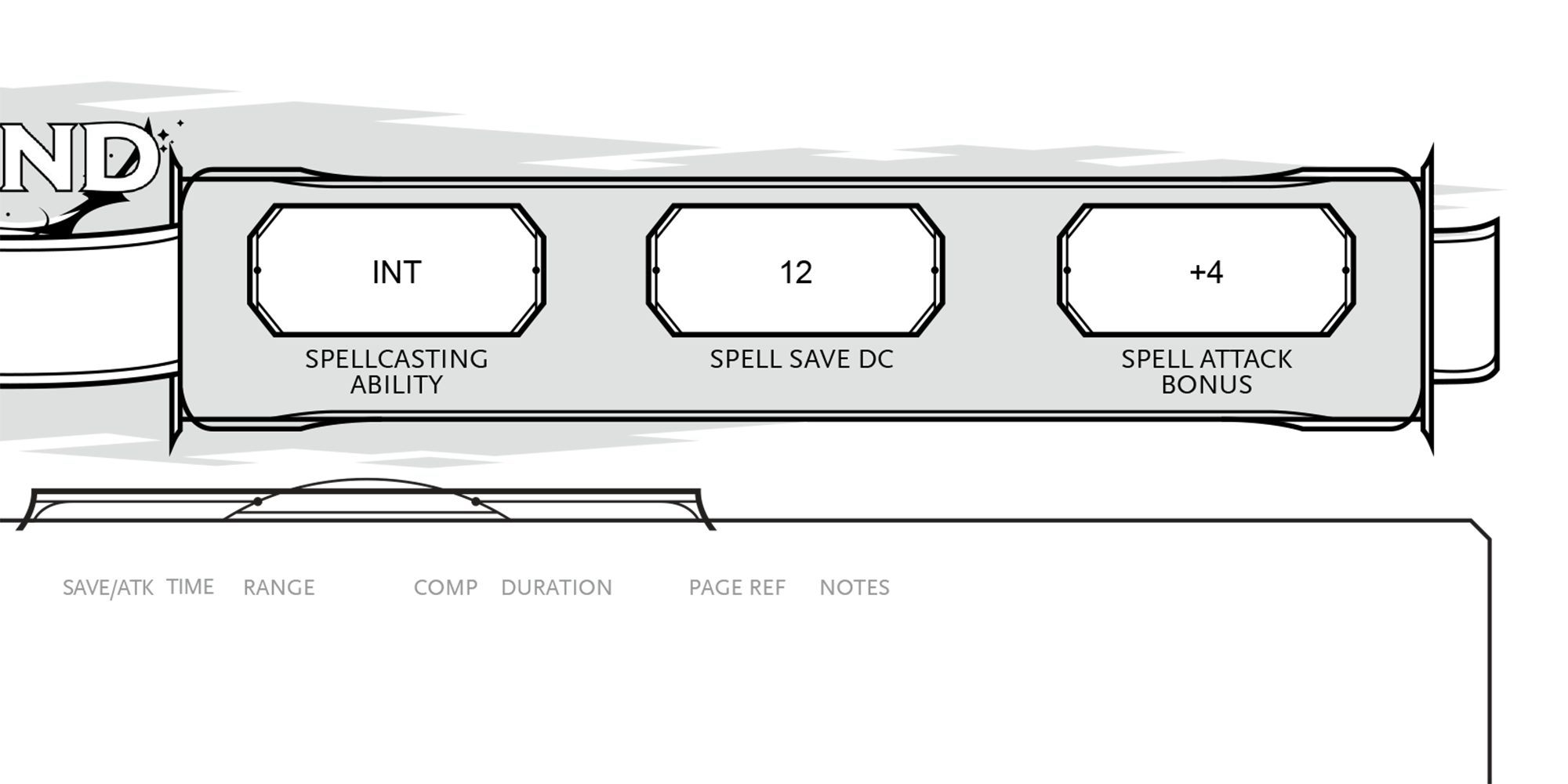
This is one of the final steps for character creation. If a character is capable of casting spells, you can choose which spells you are able to cast. Each class has its own list of spells that class can learn and at what levels. Simply refer to the Player's Handbook and see which spells you can learn and how many you can for a character of your level, and take the spells that appeal to you.
As a level one wizard, Sample knows three cantrips from the wizard spell list, three first-level spells from that list, and has two first-level spell slots , meaning he can cast two first level spells every day. (If you're making a non-magical class, this step can be skipped.)
Choose A Background And Write A Backstory
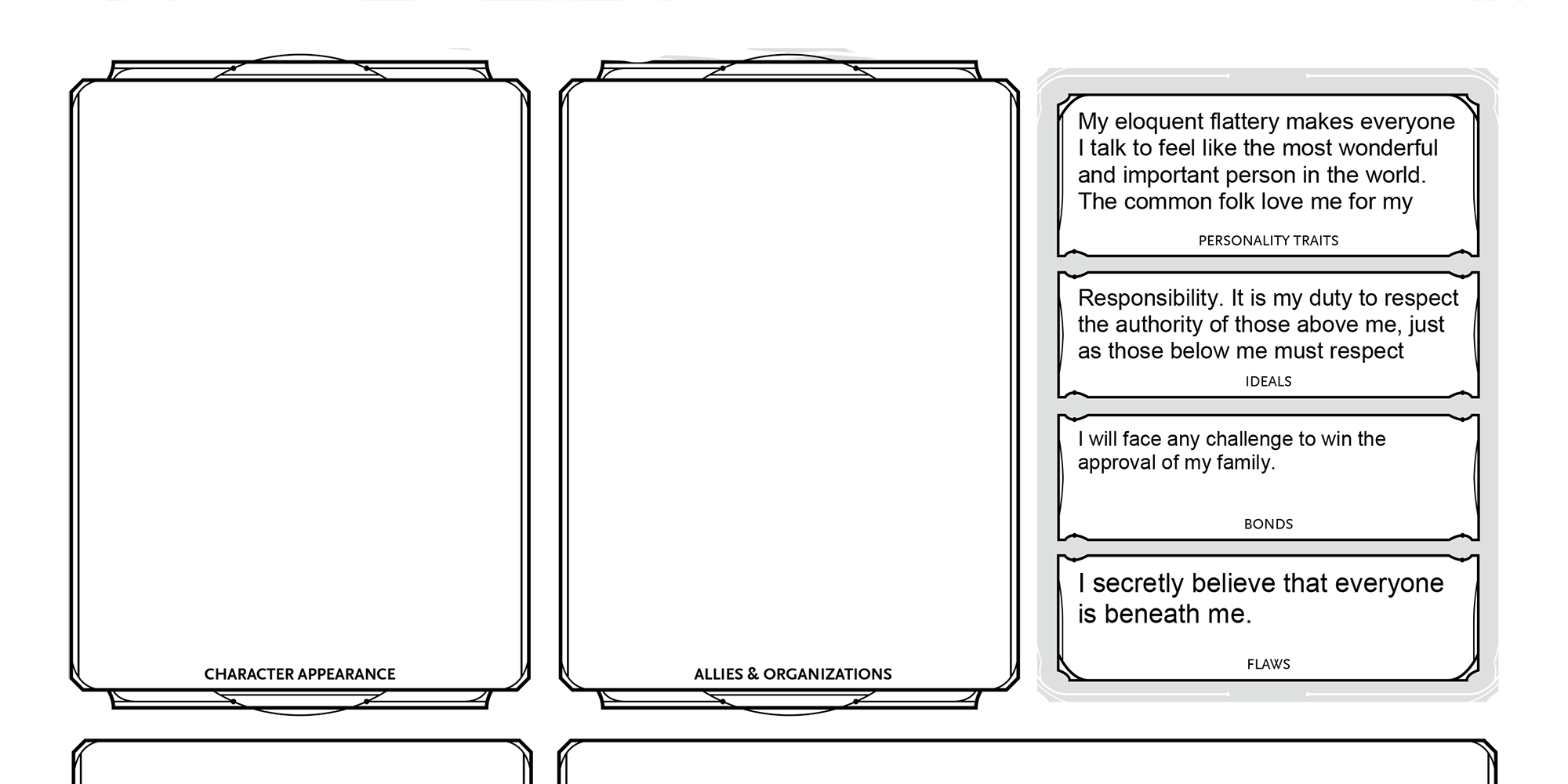
Lastly, all you need to do is flesh out your character's backstory and personality. This is the step that lets players be the most creative with their characters, and the sky is truly the limit when writing a backstory.
D&D offers unique backgrounds that players can choose to give their characters that offer minor, yet flavorful perks based on their background.
We decided to give Sample the Noble background, which provides him with proficiency with playing cards, an additional language, and a coin purse containing 25 gold.
Spell Slots
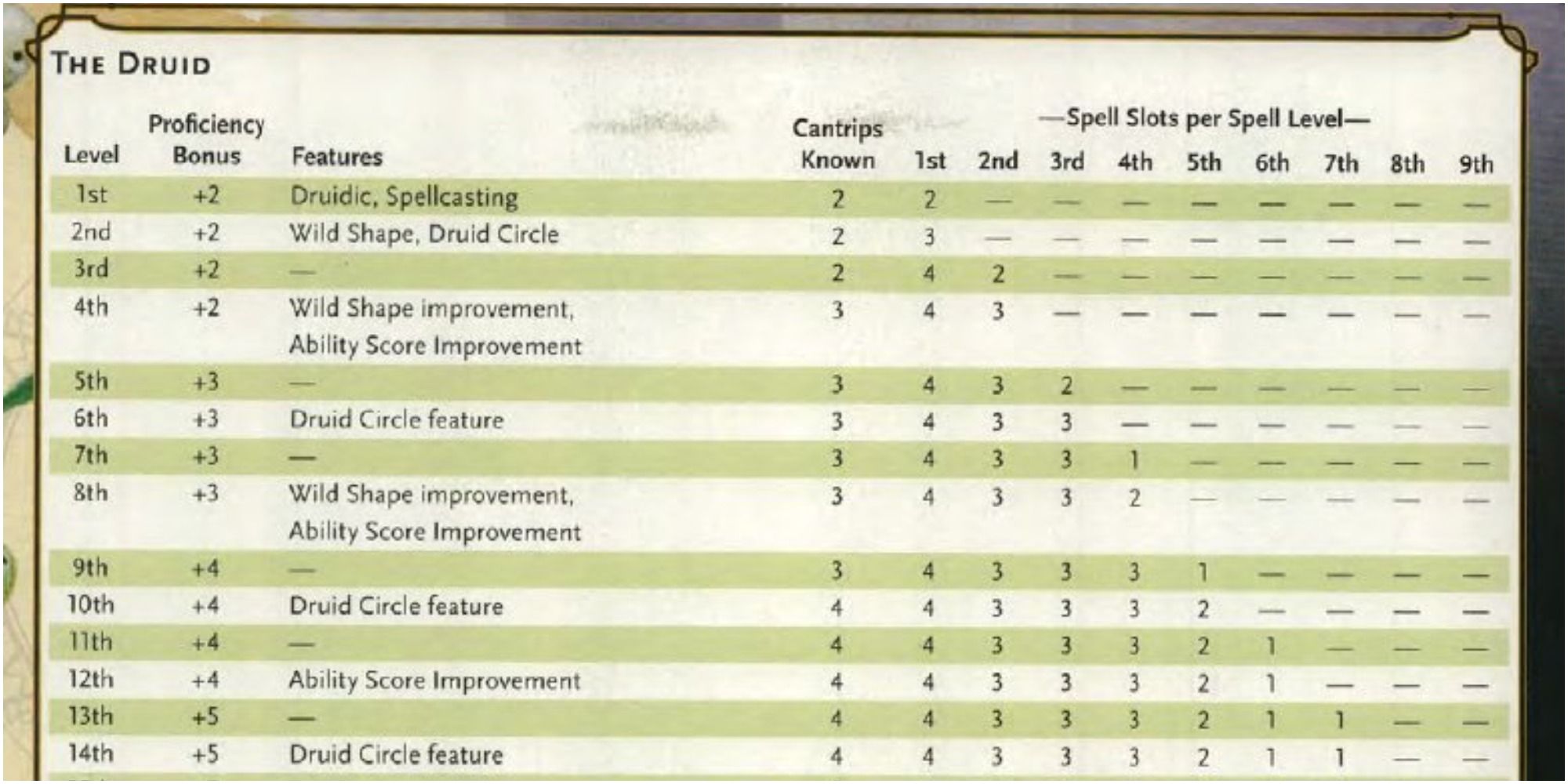
If you're playing a magical class such as a wizard or a sorcerer, you need to keep track of your spell slots which track how many spells you can still cast.
The number of spells you can cast of each level is based not just on how many spell slots you have, but what level those slots are. While most classes recover their spell slots by completing long rests, Warlocks regain their spell slots on a short rest. For example, a level three druid would have access to four level-one spell slots and two level-two spell slots, all of which would be recovered upon finishing a long rest.
As each class handles spell slots differently, to figure out how many spell slots your character has, you can simply check your class's corresponding level-up chart in the Player's Handbook. These charts are also available for free online.
It is important to note that an exception to spell slots are cantrips, which can be cast as many times you want per day.
Tracking Spells
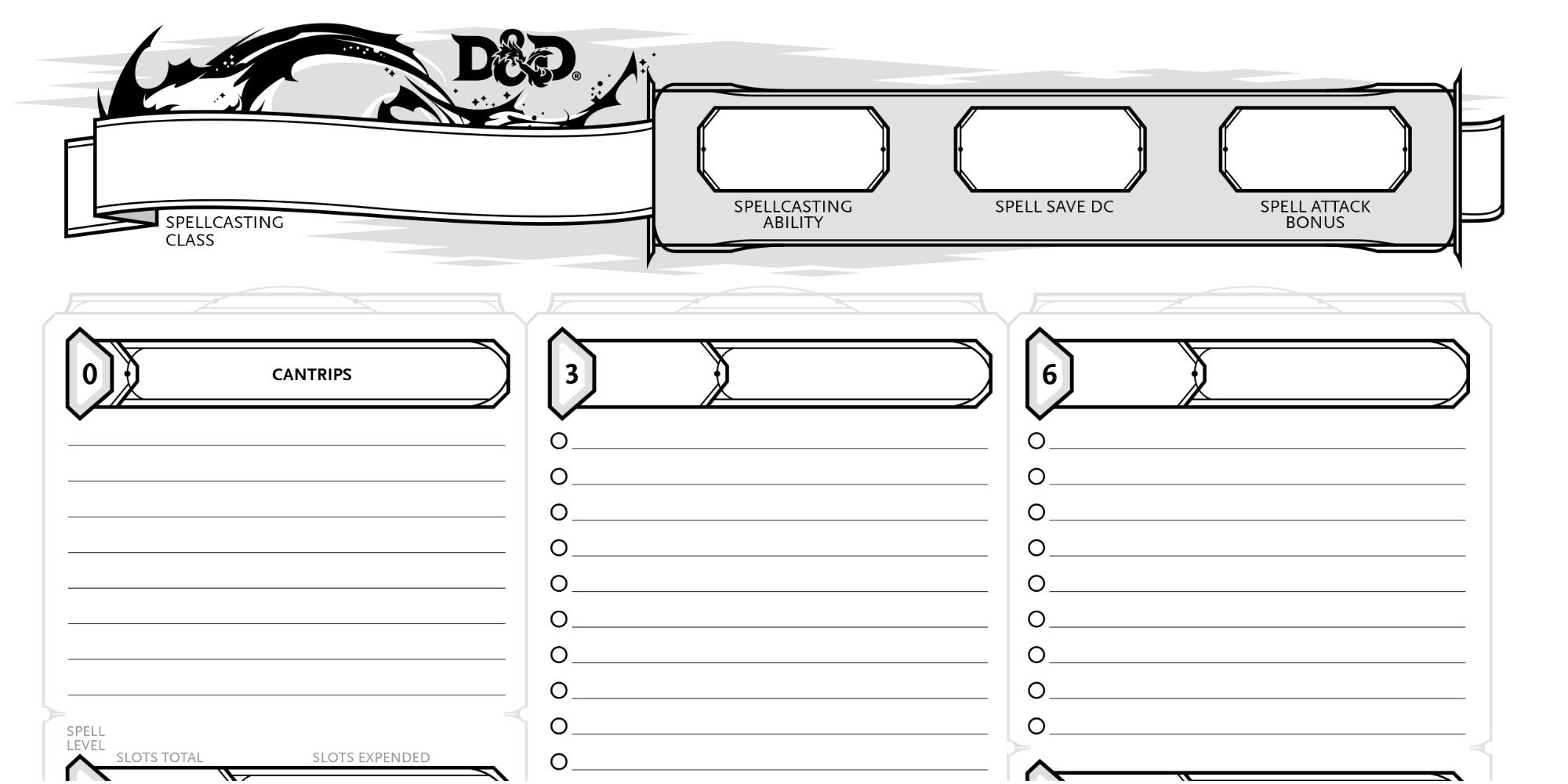
While these pages are often completely unused by those playing martial classes, D&D character sheets come with entire pages dedicated to tracking spell information. While spell cards can be handy, this space is perfect for keeping track of which spells your characters knows.
Some classes such as Warlock and Wizard are locked in, permanently learning their spells, while classes like Cleric and Druid are actually capable of choosing new spells from their respective spell lists every time they finish a long rest.
Similar to how you figure out how many spell slots you have, the Player's Handbook and D&D Beyond each contain your class and level's information for how many spells you should know, based on which spells your character is capable of learning.
Calculating Spell Save DCs
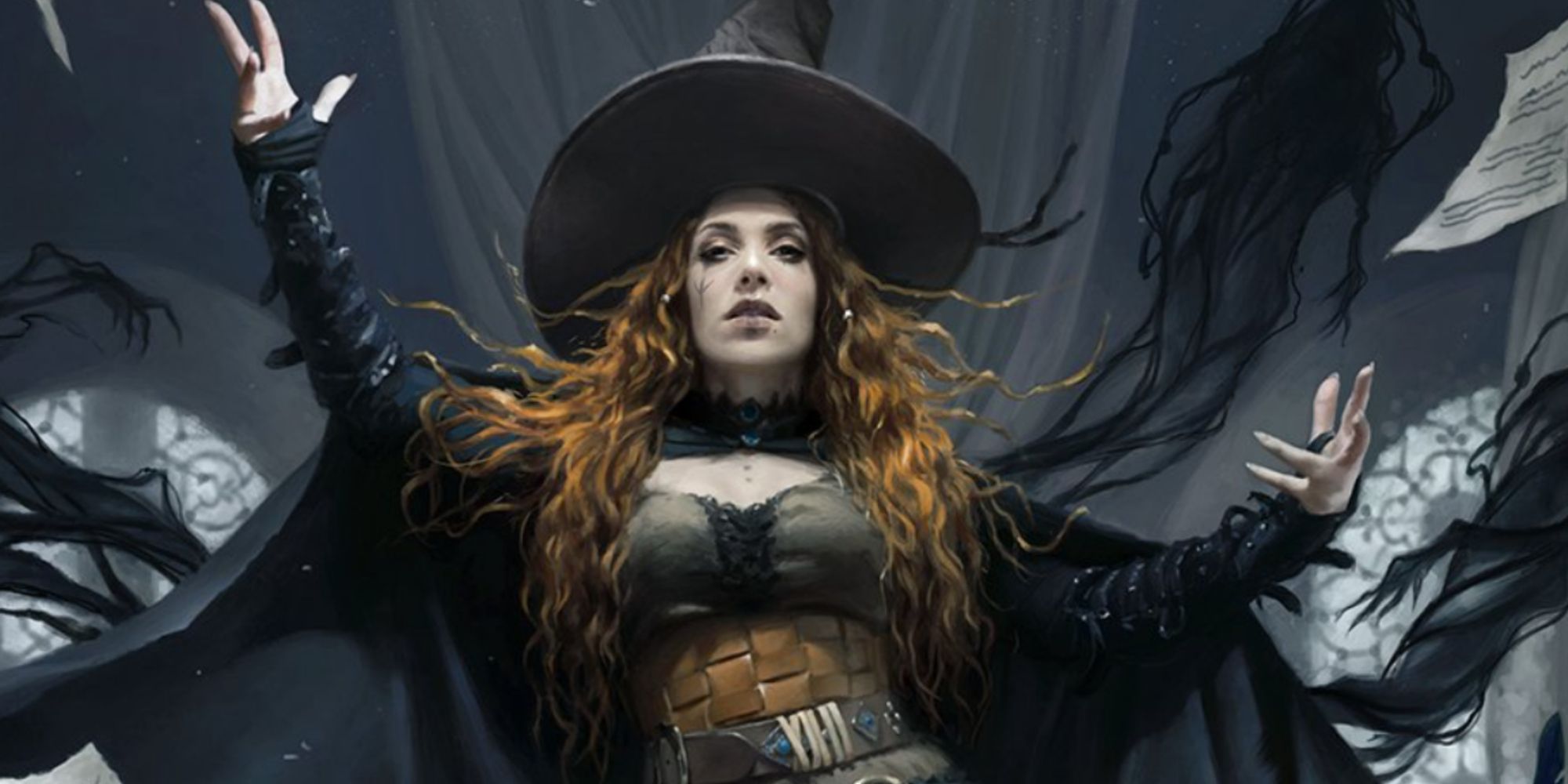
For spellcasters such as Sample here, an element that's important to know about your character is their Spell Save DC. A sizable number of spells in Dungeons & Dragons require one or more creatures to make a saving throw against the spell's effect to either reduce the spell's impact against them or potentially negate the effect entirely. A Spell Save DC is the minimum number that must be rolled in order to succeed a spellcaster's saving throw.
In order to calculate a Spell Save DC, simply start with 8, add your spellcasting ability modifier, and add your proficiency bonus. As Sample is a Wizard with an Intelligence ability score modifier of +2, Sample's Spell Save DC is 12.
Multiclassing (Optional)
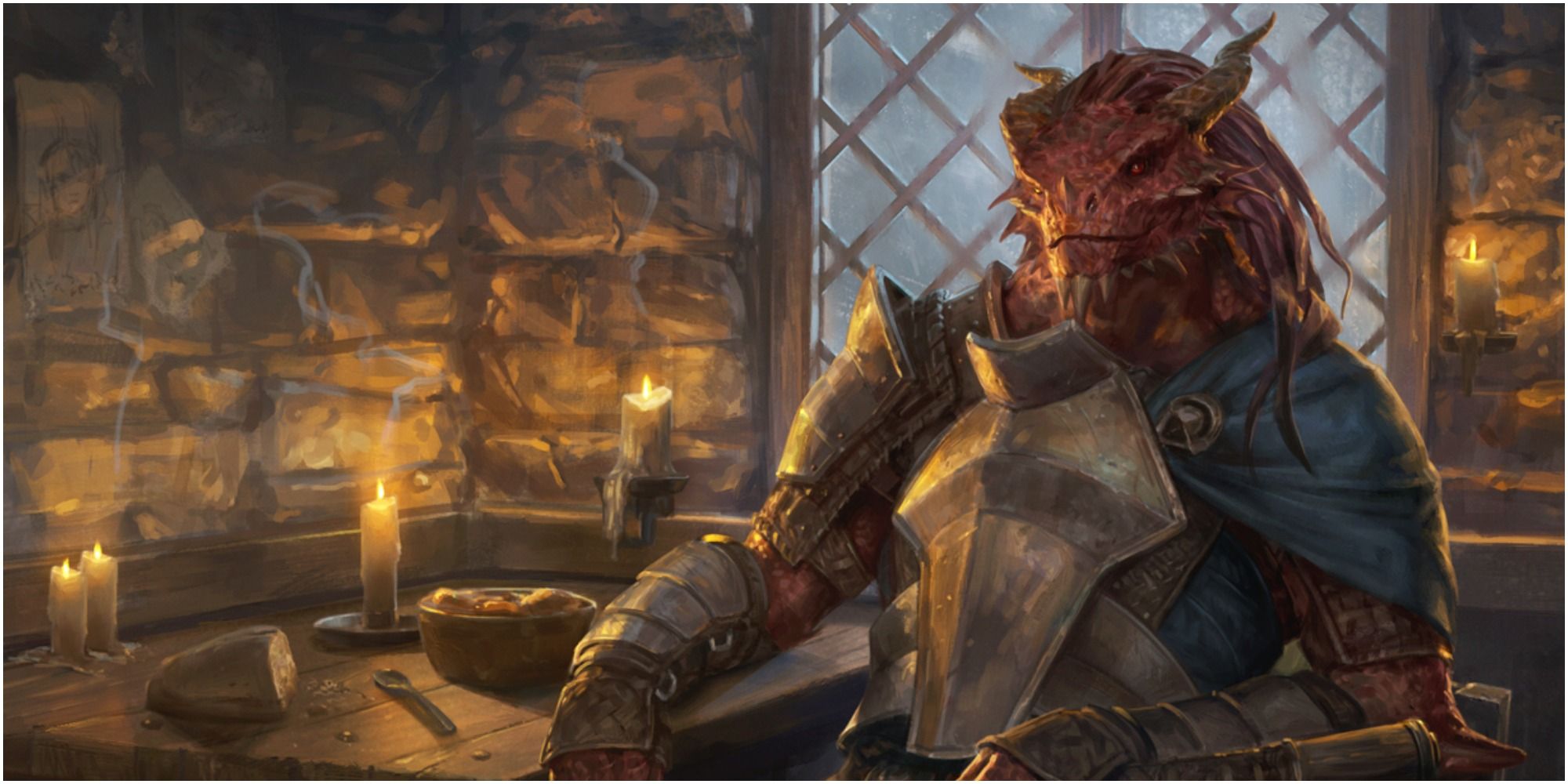
While each class in D&D offers its own benefits and utility, sometimes you may want to dabble in two or more classes simultaneously. Thanks to the D&D system of multiclassing, this is quite possible. In order to multiclass, all you need to do when leveling up is gain one level of a different class than the one you started with.
For example, after a level two rogue levels up to level three, they could opt to gain one level of fighter rather than a third level of rogue. This character would continue as a level three character, but would simultaneously be a level two rogue and a level one fighter. It is important that every class in the game has an ability score prerequisite if a character wants to start gaining levels in a given class.
For your convenience, these requirements are:
- Barbarian: Strength 13
- Bard: Charisma 13
- Cleric: Wisdom 13
- Druid: Wisdom 13
- Fighter: Strength 13 or Dexterity 13
- Monk: Dexterity 13 and Wisdom 13
- Paladin: Strength 13 and Charisma 13
- Ranger: Dexterity 13 and Wisdom 13
- Rogue: Dexterity 13
- Sorcerer: Charisma 13
- Warlock: Charisma 13
- Wizard: Intelligence 13
If a character is to start taking one or more levels of another class, the new information of their abilities is kept alongside their other class information, spells, etc. on their D&D character sheet.
Source: https://www.thegamer.com/dungeons-dragons-character-sheet-examples/
0 Response to "Easy to Follow Rolling Your 5e Dd Charc"
Post a Comment